
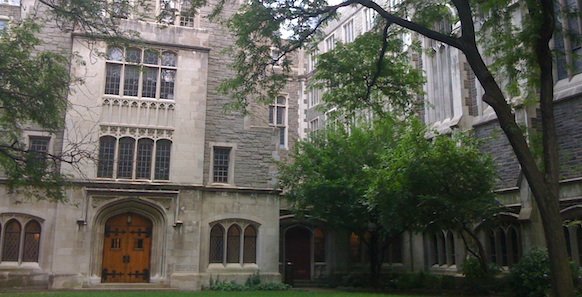


2011 - 2012
Embodied Archives: Tehran Brothels and Toilets as Heterotopia
Monday, December 5, 2011, from 12:00-2:00 pm for the final MENA workshop of the semester.
Our colleague Kristin Soraya Batmanghelichi (Department of Middle Eastern, South Asian and African Studies) will present the second chapter from her dissertation titled, "Revolutions and Rough Cuts: Conceptualizing Women's Bodies in Contemporary Iran."
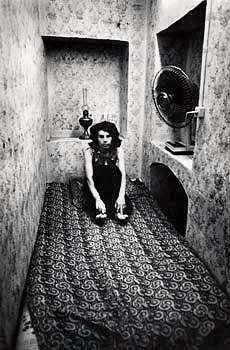 Kaveh Golestan
This chapter examines the history of brothels and red-light districts in Tehran, discussing the conceptual shifts and transformations in state and religious discourses on prostitution, concentrating on the seminal roles of prostitutes and their bodies in supplying male sexual gratification as a kind of standard, expendable labor practice. Through my analysis of Shahr-e Noh, Tehran's most controversial (and now almost forgotten) red-light district, which for almost a century, housed and subjugated Iranian women in a barricaded, sexual and psychological servitude, I explore how the geographic "site" of prostitution during Pahlavi Iran mutated into virtual, heterotopic site throughout the Islamic Republic, wherein the body of the female prostitute becomes the site for the expression of the discharge of male sexuality. From research that also includes interviews conducted in Tehran, I elaborate the influence of pastoral power in the Iranian, Islamic context and relate it to Taleghani's expression that "every society needs a toilet." I argue that this comment reflects a religious and political discourse on the body that creates women's bodies as a heterotopic space. Thus the toilet is embodied by women prostitutes who themselves constitute the underbelly of patriarchal system of power that addresses and rationalizes the sexual needs of men.
--------------------------------------------------------------------------------------------
Professor Rhoda Kanaaneh will serve as discussant and help begin our conversation about Soraya's work. As always, the MENA workshop will be held in 208 Knox Hall. Lunch, courtesy of the Middle East Institute, will be served at 12 and the discussion will begin at 12:30.
If you are planning to attend, please RSVP by Thursday, December 1 so we can order the food accordingly. We will also send all attendees a copy of Soraya's chapter to read in advance. Thank you to everyone who came out and participated in the extremely fruitful discussions at our MENA workshops this semester. We look forward to seeing you all this coming Monday!
A Landscape of War: On the Nature of Conflict in South Lebanon
Monday, November 14, 2011, 12:00-2:00pm, 208 Knox Hall
Munira Khayyat (Department of Anthropology)

An inquiry into life in a rural warzone, a naturalized battlefield, a life-world strung between the arts of cultivation and sciences of devastation, this paper examines landscape as a site of convergence of life and war. The landscape in question is the borderland of South Lebanon that unfurls as an agricultural-military hybrid formed in entangled cycles of seasons and seasons of war. Moving away from dramatic events and charged political categories commonly used to comprehend this long-term warzone (Arab-Israeli conflict, Hizbullah, 'Resistance and Steadfastness,' etc.) I focus instead on the landscapes of the ordinary where wartime violence (past, present and potential) has been domesticated, 'naturalized' by a rural community living off the land. Fields of tobacco, haunted oak, goats, a graveyard and purple grasslands: what do those tell us about life and war? In attending closely to the silent stories of landscape, the practices and processes of everyday life, and the turns and returns of agricultural cycles (and seasons of war), I "gather" a dwelt understanding of a landscape unfolded in entwined rhythms of cultivation and patterns of conflict. This paper explores dimensions of 'landscape' and 'war' and different ways of telling.
--------------------------------------------------------------------------------------------
Professor Michael Taussig will serve as discussant. As always, the MENA workshop will be held in 208 Knox Hall. Lunch, courtesy of the Middle East Institute, will be served at 12 and the discussion will begin at 12:30.
Please RSVP by Thursday, November 10. We will also send all attendees a copy of Munira's chapter to read in advance. Thank you to everyone who came out and participated in the extremely fruitful discussion at our last workshop and we look forward to seeing you all this coming Monday!
Immigrant Masculinities: Gender, Sexuality and Ethnicity in Contemporary France
Monday September 26th, 2011, from 12-2:00 in Knox 208
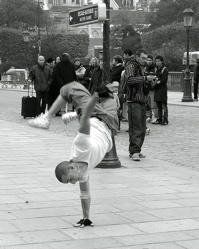
The first workshop of the semester : Mehammed Mack of the French and Comparative Literature Department will discuss a segment from his dissertation titled Immigrant Masculinities: Gender, Sexuality and Ethnicity in Contemporary France will be presented at the workshop. Please RSVP to this email address, if you will be able to attend, so that we can order food accordingly. We hope that you'll be able to make it.
Colony, Community, and Commentary
Dissertation Prospectus
Monday, April 16, 2012, from 12:00-2:00 pm for the final MENA workshop of the semester.
Our colleague Elizabeth Marcus (French and Romance Philology and ICLS) will present her dissertation prospectus titled, "Colony, Community, and Commentary: The Dialogic Construction of la particularité libanaise, 1943-1958"
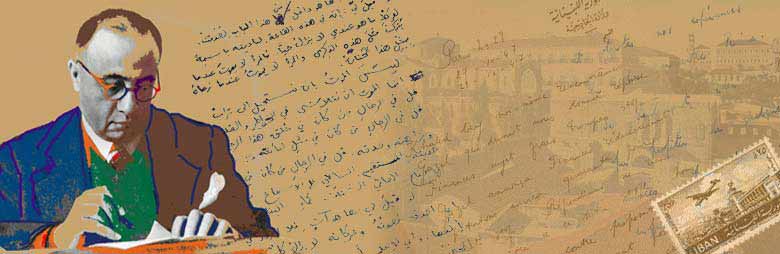
My dissertation examines the way in which writers in post-independence Lebanon explored and articulated different contemporary meanings of the term `community´, and the way in which we can consider their articulations of this term in respect of contemporary debates in France on the conception and construction of the postwar community from 1943-1958. Through an examination of numerous different sources -political writings, journalism, legal commentaries and fiction -I will examine local intellectual life in Lebanon at a moment of political, cultural and legal change.
My work looks to propose an alternative framework through which we can look at post-independence Lebanon, in order to answer the following questions: after the French helped to conceptualize the legal construction of the Lebanese community subsequent to negotiations regarding the Lebanese constitution of 1926, in what way was the Lebanese `community´ envisioned after Lebanese independence? How did Lebanese intellectuals deal with a moment of rupture and continuity, and did they see it framed -both politically and discursively- in such terms? In what way did these expressions find resonance in discussions of community in France after the war? What were the intersections -if any- between Lebanese and French intellectuals regarding their approaches towards the role of the state, the individual and the community?
--------------------------------------------------------------------------------------------
Professor Madeleine Dobie will serve as discussant and help begin our conversation about Elizabeth's work. As always, the MENA workshop will be held in 208 Knox Hall. Lunch, courtesy of the Middle East Institute, will be served at 12 and the discussion will begin at 12:30.
If you are planning to attend, please RSVP by Thursday, April 12 so we can order the food accordingly. We will also send all attendees a copy of Elizabeth's prospectus to read in advance. Thank you to everyone who came out and participated in the extremely fruitful discussions at our MENA workshops this semester. We look forward to seeing you all this coming Monday!

