


2009 - 2010
Seminar in Arabic Studies
Thursday, 29th April 2010
The Poetry of the Ancient Arabic Sagas
Wolfhart Heinrichs
Harvard University
Dinner will be at 6:00 pm, on the third floor. The talk will begin at 7:00 pm. Members and guests of the Seminar who are not also members of Columbia's Faculty House may buy dinner vouchers in the Faculty House office on the ground floor before the meeting starts. Those unable to attend the dinner are welcome to join the talk at 7:00pm.
RSVP no later than MONDAY, 26th April if you plan to attend dinner to Yasmine Ramadan.
Faculty House, Columbia University
400 West 117th Street, New York, NY
10027
MESAAS Colloquium:
Thursday, April 22 at 4:00 pm
Savarkar (1883-1966), Sedition and Surveillance:
The Rule of Law in Early 20th Century Colonial India
Janaki Bakhle
History, Columbia
208 Knox Hall
Please note that the paper will be circulated in advance and will not be presented at the colloquium. Printed copies will also be available in the department office.
Last South Asia Graduate Student Forum of the Spring Semester
Monday, April 19, 2010
4:10-6:00 p.m. | 208 Knox Hall
Styles, Stories, Scripts: Telugu and Tamil in Nayaka-Period Mural Painting in Tamil Nadu
Anna Seastrand
Art History and Archaeology
This paper addresses the theme of circulation through the close study of inscriptions and paintings at two seventeenth-century mural sites. Although located in the Tamil region, these sites make extensive use of Telugu language and the architectural and pictorial styles of Telugu-speaking areas.?? The mingling of styles and languages at these sites demonstrate the interrelation of artistic patronage and its political and social contexts. Focusing on a period, material, and area that are little studied and poorly understood highlights how the history of painting and the history of the region???the study of the dynamic political and social lives of the sites??? patrons, artisans and audiences???equally illumine one another.
The Forum is open to all members of the Columbia community. If you have any questions, contact Hamsa Stainton or Arthur Dudney.
Columbia Seminar in Ottoman and Turkish Studies
Whose War? Whose Holy War: The Ottomans in 1914
Mustafa Aksakal
History, American University
Friday, April 16th, 2010
1:00-3:00 pm | Faculty House (Seminar Room 4)
Why did the Ottomans in 1914 enter a war that was then still a European conflict, one in which the Ottomans seemed to have no immediate stake? Why did they declare jihad? Did they enter the war because Enver Pasha, the minister of war, was dazzled by German guns? Did the Ottomans declare holy war because Kaiser Hajji Muhammad Wilhelm II -- in the cheeky parlance of some Allied propagandists -- had ordered it?
Coffee and dessert to follow (3-5pm).
For directions to the Faculty House, please visit ??http://facultyhouse.columbia.edu/. For any questions, please contact Cenk Palaz.
Interdisciplinary Graduate Conference
on the Middle East, South Asia and Africa
Thursday, April 15 to Saturday, April 17, 2010
Contact email: [email protected]
Hosted by the Department of Middle East and Asian Languages
and Cultures (MEALAC) at Columbia University
The discipline that was once called ???Oriental Studies??? has been divided up in various ways in today???s university. Post-colonial literature has a foothold in the English department, history departments have by and large stopped confusing ???European history??? with ???world history,??? and of course the area studies departments with venerable names like Near Eastern Studies or South Asian Languages and Civilizations have taken up an array of new methodologies from other departments. Several universities have begun expanding their African and South Asian studies offerings under the umbrella of ???Global Studies.??? This conference is concerned not with ???the death of the discipline??? as so many others have been, but rather with the diversity of the disciplines. We will survey this through student presentations, two faculty discussion panels, and a keynote address by an influential scholar.
MESAAS Colloquium:
Thursday, April 8th at 4:00 pm
Who is a Jew?
The Biological Sciences and National Self-Definition
Nadia Abu El-Haj
Anthropology, Barnard
208 Knox Hall
Please note that the paper will be circulated in advance and will not be presented at the colloquium. Printed copies will also be available in the department office.
Thursday, April 1, 12:00-2:00pm
717 Hamilton Hall
Mobile Men and Mobile Texts in Indian Ocean Islam
Professor Engseng Ho??
Professor Ho, a specialist on Arab/Muslim diasporas and their relations with Western Empires, is Professor of Cultural Anthropology and Professor of History at Duke University. He was previously a Professor of Anthropology and a Senior Scholar at the Harvard Academy for International and Area Studies. His most recent publications include The Graves of Tarim: Genealogy and Mobility across the Indian Ocean (University of California Press, 2006).
Sponsored by the Ifriqiyya Colloquium in association with The Institute of African Studies and Department of Middle Eastern, South Asian and African Studies (MESAAS).
Ph.D. Thesis Presentation on Religion and Politics
Parliaments of Caliphs: Reconstructing Islamic Law in Alaama Iqbal???s League of Muslim Nations
Haroon Moghul (Current PhD in MEALAC, Columbia University)
Discussant: Souleymane Bachir Diagne
Wednesday, March 31, 12:00???2:00pm
801 International Affairs Building
Lunch will be served.
Barbara Stoler Miller Lecture
Two Weddings and a Funeral: What is Islamic about the "Muslim"?? Princely State of Bhopal?
Barbara D. Metcalf
University of Michigan
Monday, March 29
509 Knox Hall | 4:00-5:30pm
Bhopal in colonial India is best known for having been ruled for?? over a hundred years from 1819 to 1926 by a lineage of four Muslim women. The third of the Bhopal begums, Nawab Shah Jehan Begum, was in power at?? the height of British rule in the late 19th century. Bhopal was routinely described as "the second largest Muslim princely state;" the state's label derived from the religious background of the ruler. Going beyond this label, many observers have described Shah Jehan Begum's period as one of "Islamization." In 1871, she made a radical second marriage, a break with respectability and family custom - which she justified as Islamic. In 1890 her second husband, one of the best known Islamic scholarly reformers and putative "jihadis" of the colonial era, died. Instead of understanding the period framed by these events by the blanket term of "Islamization," this talk explores issues of political autonomy, transnational networks, modern religious practice, and a ruler's distinctive taste.
Barbara D. Metcalf is the Alice Freeman Palmer Professor of History at the University of Michigan, where she served as Director, Center for South Asia Studies, 2004-07.
Co-sponsored by the Barnard College Department of Asian and Middle
Eastern Cultures
MESAAS Colloquium:
Thursday, March 25th at 4:00 pm
The Idea of the West:
Bhudev Mukhopadhyay's critique of Western modernity
Sudipta Kaviraj
MESAAS, Columbia
208 Knox Hall
Please note that the paper will be circulated in advance and will not be presented at the colloquium. Printed copies will also be available in the department office.
Ph.D. Thesis Presentation on Religion and Politics
Religions of Doubt:
Critique of Religion and Modernity in the Frankfurt
School and in Iran ??? Adorno, Benjamin, Shariati and al-e Ahmad
Ajay Chaudhary (Current PhD in MEALAC, Columbia University)
Discussant: Sudipta Kaviraj
Wednesday, March 24, 12:00???2:00 pm
801 International Affairs Building
Lunch will be served.
MESAAS Colloquium:
Thursday, March 11th at 4:00 pm
Prophets, Kings and Heroes:
The Reformulation of Iranian History in the Ninth Century Arabic Histories
Ghazzal Dabiri
MESAAS, Columbia
208 Knox Hall
Please note that the paper will be circulated in advance and will not be presented at the colloquium. Printed copies will also be available in the department office.
Friday, March 5, 2010
208 Knox Hall | Noon-2pm
The Story of Kiswahili?
John Mugane
African and African-American Studies, Harvard
Professor Mugane is working on a history of Kiswahili. ??His most recent
publications include Linguistic Typology and Representation of African
Languages (Africa World Press, 2003).
Sponsored by The Institute of
African Studies and Department of Middle Eastern, South Asian and African
Studies (MESAAS).
Conference on Ottoman Legacies in Text and Landscape
Friday, February 26th
Faculty House, 400 West 117th St.
Ottoman Beirut: History, Legacy, and Sectarian??Memory
Professor James Reilly
Department of Near and Middle Eastern Civilizations, University??of??Toronto,
The Ottoman Legacy in the Urban Landscape: A??Way of Seeing.
Assistan Professor Amy Mills
Department of Geography,??University of??South??Carolina
Moderator: Christine Philliou, Columbia University
The Ottoman legacy in the Middle East and Balkans has been a frequent??subject of debate over the past several years, ever more so after the??publication of Carl Brown's edited volume, Imperial Legacy: The Ottoman Imprint on the Balkans and the Middle East, in 1996. While common treatments of this question include studies of politics, language, and architecture, this conference will focus on two specific??and very different types of legacies: the way the Ottoman past is remembered in modern/confessional Lebanese historiography, and the ways it is remembered and forgotten in a neighborhood, or mahalle, of??Istanbul today.??
Seminar in Arabic Studies
Marcel Khalife's 'Oh Father, I'm Yusuf' and the Struggle for Political Freedom and Religious Sensitivity
Professor Nasser Al-Taee, University of Tennessee
Thursday, February 25
Faculty House, 400 West 117th Street
Drinks will be available in the Faculty House starting at 5:30 P.M. Dinner will follow at 6:00 P.M. The talk will begin at 7:00 P.M.
MESAAS Colloquium:
Thursday, February 25th at 4:00 pm
???The Black House,' or How The Zulus Became Jews
Hlonipha Mokoena
Anthropology, Columbia
208 Knox Hall
Please note that the paper will be circulated in advance and will not be presented at the colloquium. Printed copies will also be available in the department office.
South Asia Graduate Student Forum
From Delhi to Karachi:
The Problem of Muhajir Identity
Presentation by Zahra Sabri
Monday, February 22
208 Knox Hall | 4:10-6:00 p.m.
Sixty-two years after partition, the word muhajir (one who has quit his country) is used in lay and academic contexts for certain groups of people (and their descendents) who left present-day India for Pakistan after partition. With the rise of the Mohajir Qaumi Movement (MQM) in the 1980s and the party???s dramatic and sustained electoral success, there has been an overwhelming tendency to treat muhajir identity as synonymous with the MQM. This paper argues that muhajir identity is independent from, and predates, the MQM.
The Forum format is as follows:
20-30 minutes: Presentation
20-30 minutes: Q & A and discussion
60 minutes: Reception (food, samosa etc., and drink provided)
MESAAS Colloquium:
Thursday, February 11th at 4:00 pm
Fashioning the Moral Subject:
Shari'a's Technologies of the Self
Wael Hallaq
MESAAS, Columbia
208 Knox Hall
Please note that the paper will be circulated in advance and will not be presented at the colloquium.
Printed copies will also be available in the department office.
For more information, contact Jill Kitchen
MESAAS Colloquium:
Thursday, January 28th at 4:00 pm
Gandhi's philosophical qualms about the enlightenment
Akeel Bilgrami
Philosophy, Columbia
208 Knox Hall
Please note that the paper will be circulated in advance and will not be presented at the colloquium. Printed copies will also be available in the department office.
For more information, contact Jill Kitchen
| MESAAS | ?????? ???????? ?????????? ???????????? ?????????? ?????????????????? |
| Middle East Institute | ???????? ?????????? ???????????? |
| The Arabic Circle | ?????????????????? ???????????????????????? |
| invites you to its first meeting | ???????????? ?????? ???????????????? ?????????? |
| ???Movie Screening: The Borders??? | ?????? ????????: ?????????????? |
| Moderated by Omar Khalifah | Room 207 Knox Hall |
| Wed, January 27, 6:00-7:30 pm | Refreshments will be served |
Iran After the Election
The recent elections in Iran, and subsequent challenges to their legitimacy, have been a matter of enormous internal conflict in Iran, and of seemingly endless debate in the rest of the world. As protesters continue to take to the Iranian street to voice their opposition to the elections, fault-lines are emerging amongst the ruling elite. These momentous events constitute a significant challenge to the legitimacy of the Iranian regime and the future of the Islamic Republic. The conference will be an opportunity to have leading Iranian scholars and analysts discuss the impact of the recent elections, Iran's relationship with the international community and the theocratic foundations of the Islamic Republic.
Speakers:
- Ervand Abrahamian, Baruch College
- Asef Bayat, Leiden University
- Richard Bulliet, Columbia University
- Houchang Chehabi, Boston University
- Hamid Dabashi, Columbia University
- Mansour Farhang, Bennington College
- Farideh Farhi, University of Hawaii
- Hossein Kamaly, Barnard College
- Firoozeh Kashani-Sabet, University of Pennsylvania
- Gary Sick, Columbia University
- Abdolkarim Soroush
- Shahla Talebi, Arizona State University
- Wayne White, Middle East Institute (D.C.)
- Judith Yaphe, The National Defense University
Saturday, Dec 5, 8:30 a.m. - 7 p.m.
International Affairs Building,
Altschul Auditorium
Columbia Law School
Center for Gender and Sexuality Law
Afsaneh Najmabadi, Harvard University,
The State of Science and Sin
Tuesday, December 1, 2009, 4:20-6:10
Case Lounge, Room 701, Greene Hall, Columbia Law School
http://www.law.columbia.edu/
The Edward Said Memorial Lecture
The Unipolar Moment and the Culture of Imperialism
Thursday, December 3, 2009 at 6:15 pm
Altschlul Auditorium, 417 International Affairs Building
Noam Chomsky
Institute Professor and Professor Emeritus
Massachusetts Instituteof Technology
This event is free and open to the public. Seating is on a first come, first served basis.
No tickets, no reservations required. Enter from 118th Street just off Amsterdam Avenue.
MESAAS Departmental Colloquium
Thursday, December 3rd, at 4:00 p.m.
Sir Henry Maine and the Post-1857 Crisis of Empire
Mahmood Mamdani
MESAAS, Columbia
Knox Hall, Room 208
Please note that the paper will be circulated in advance and will not be presented at the colloquium.
MESAAS Departmental Colloquium
Thursday, November 19th, at 4:00 p.m.
The Virtues of Recalcitrance
Democracy from Foucault to Latour
Timothy Mitchell
MESAAS, Columbia
Knox Hall, room 208
Please note that the paper will be circulated in advance and will not be presented at the colloquium.
| MESAAS | ?????? ???????? ?????????? ???????????? ?????????? ?????????????????? |
| Middle East Institute | ???????? ?????????? ???????????? |
| The Arabic Circle | ?????????????????? ???????????????????????? |
| invites you to its seventh meeting | ???????????? ?????? ???????????????? ???????????? |
| ???Egyptian Colloquial??? | ?????????????? ?????????????? |
| Presented by Prof. Ghada Badawi | Moderated by Omar Khalifah |
| Wed, November 18, 6:00-7:30 pm | ?????? ???????? :?? ???????? ???????????????? 18 ?????????? ???????????? |
| Room 207 Knox Hall | Refreshments will be served |
African Language Night
Date: Thursday, November 12, 2009
Time: 6:30 - 9:30pm
Location: 509 Knox Hall
Join the African Language Program at MESAAS for an evening of spoken word, skits, music, and food to celebrate the continents' languages.
Interdisciplinary Graduate Conference on the Middle East, South Asia and Africa
View details here...
Caste and Contemporary India
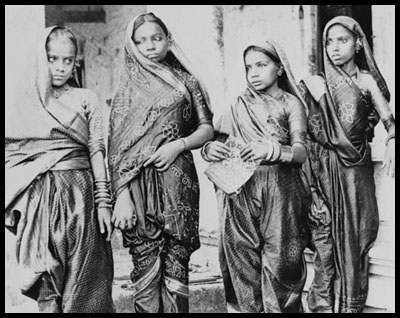
A conference in honor of Dr. B .R. Ambedkar, October 16-17, 2009

