Coral Bleaching: Breakdown in coral-algal symbiosis
Coral bleaching is defined as the loss of zooxanthellae (or a reduction in their per-cell pigment concentrations) from their invertebrate hosts. Corals turn white (or "bleach") with the loss of their zooxanthellae (although occasionally coral host pigments remain, giving the tissues a slight residual color). Without their zooxanthellae, corals typically die within a few weeks (sooner if conditions are particularly extreme). This is the best evidence we have that the reef coral symbiosis is obligate for the coral hosts (although scientists in the 1950s kept bleached corals alive indefinitely by feeding them - an experiment which curiously does not appear to have been repeated since).
Coral bleaching is conventionally viewed as a response to stressful or detrimental environmental conditions. Unfortunately, environmental stress comes in a wide variety of forms when you are a reef coral. Bleaching can result from excess sedimentation, pollution, light (either visible or ultraviolet), and (most importantly) high temperature.
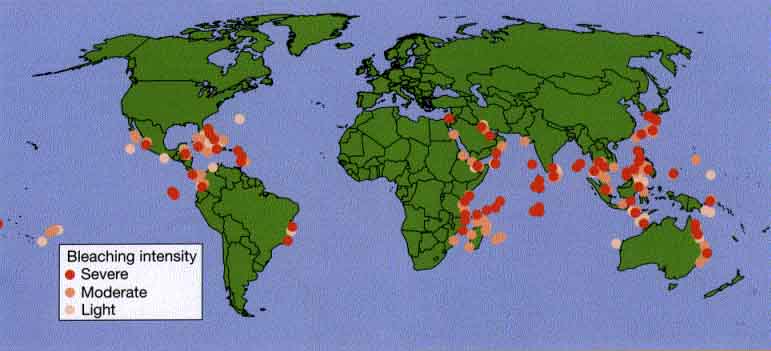
Bleaching was first recorded in the 1930s in response to experimentally-induced stress. The first natural bleaching event was observed in 1953 in response to Hurricane Flora in Jamaica, which caused a large amount of freshwater runoff onto the surrounding reefs. However, since the 1950s (and particularly since the 1980s) episodes of coral bleaching have become more frequent and more severe, culminating in the 1997-98 El Nino-Southern Oscillation (ENSO) event, which devastated reefs worldwide.
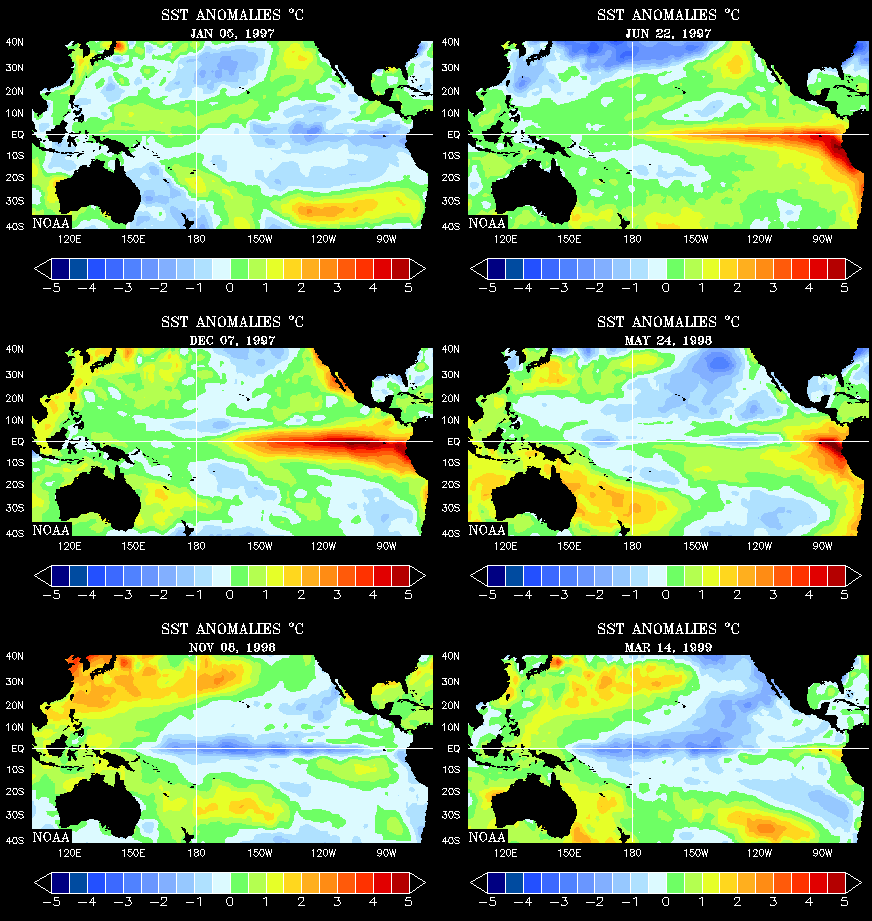
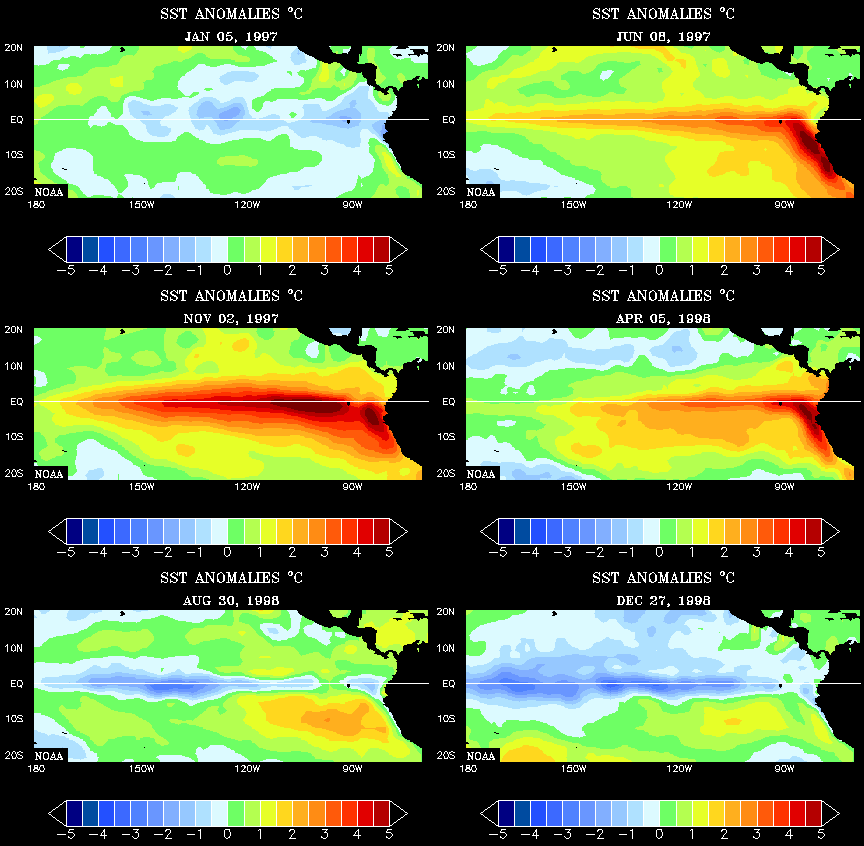
Episodes of "mass" coral bleaching, in which multiple species of invertebrate hosts are severely affected have been particularly strong in response to ENSO events in 1982-83, 1987-88, 1995-96 and 1997-98. High sea surface temperatures (SSTs) have been implicated in all of these events, and the evidence is now overwhelming that climate change and global warming is involved in mass bleaching.The development of ENSO-related warm water pools can be seen by satellite: Example 1 Example 2
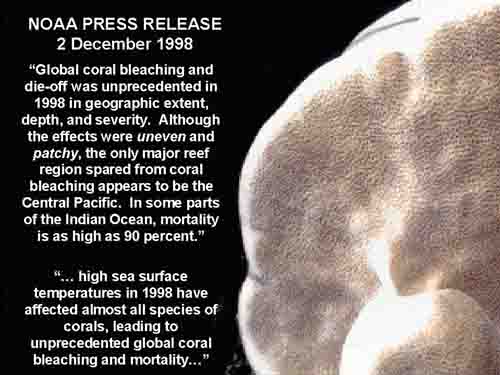
Before 1997-98, opinion was divided over the relative importance of mass coral bleaching in the list of worldwide threats to coral reefs. Strategies for reef conservation focused on the consensus among reef scientists that coastal eutrophication, overfishing and sedimentation posed more serious threats than coral bleaching. However, the effects of the 1997-98 event were so disastrous (some parts of the Indian Ocean suffered mortality greater than 90%, see offical assessment by NOAA) that global warming has now been recognized as the prime threat facing coral reefs on a worldwide basis. This is not to say that in particular locations other threats are not more immediate (for example blast fishing in Indonesia or Tanzania), but on a global scale bleaching has had the most detrimental effects, and this is likely to continue in the near future (but see Symbiont Diversity, below).