Symbiont Diversity
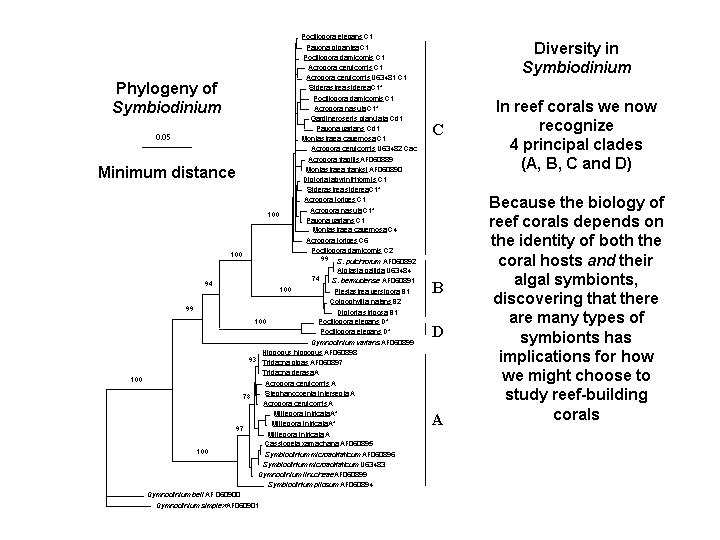
Genetic surveys of the zooxanthellae found in reef-building scleractinian corals have emphasized their diversity, documenting (conservatively) at least 17 symbiont taxa in four clades of Symbiodinium (A, B, C and D).
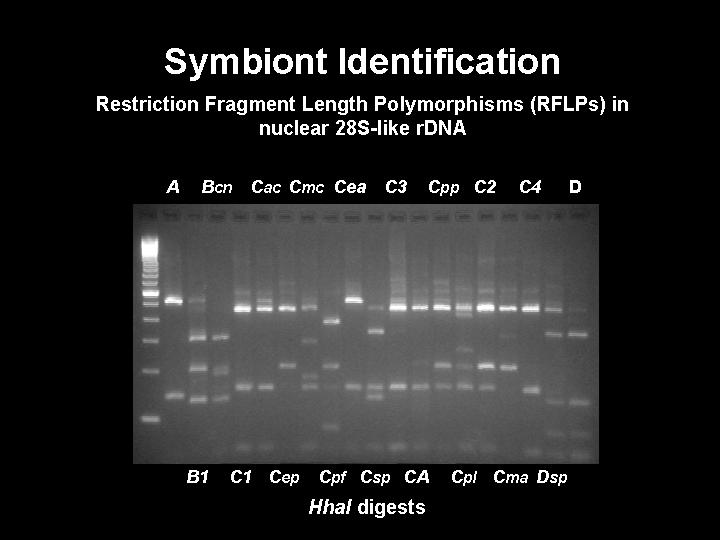
Symbiodinium is an exceptionally diverse genus: its least closely related members are separated by genetic distances equal to those separating some species of non-symbiotic dinoflagellate belonging to different orders.
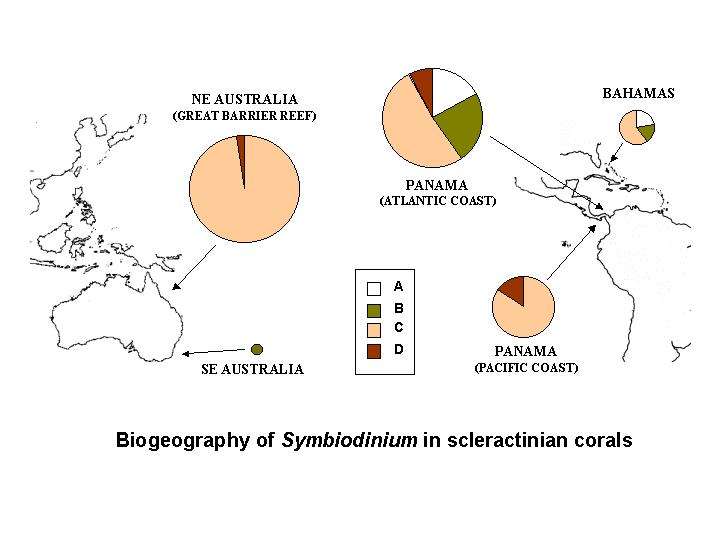
The type of symbiont found depends on the coral host species, with a strong biogeographic split between hosts in the Pacific (which generally host Symbiodinium C and/or D) and the Atlantic (which host A, B, C and/or D).
Moreover, many coral species are capable of containing multiple symbiont taxa, sometimes even at the level of the individual coral colony.
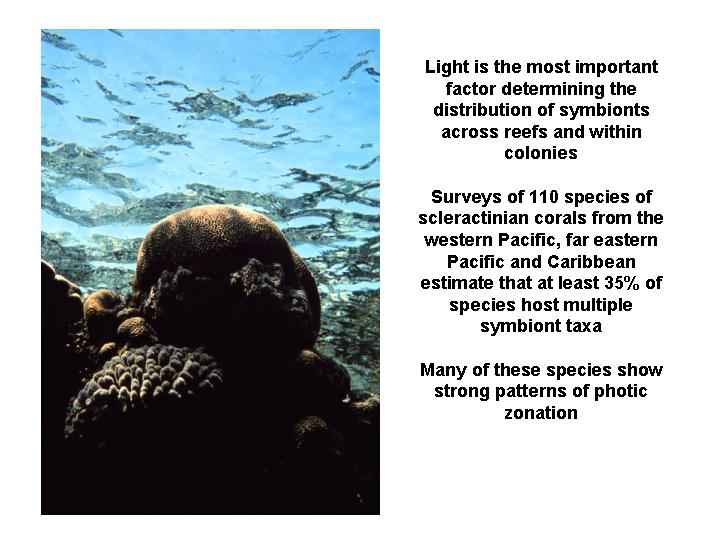
These symbiont taxa are often distributed according to incident levels of solar irradiance, with some taxa (notably Symbiodinium A and B in the Atlantic) appearing to favor high irradiance habitats, while others (notably Symbiodinium C in the Atlantic) favor conditions of low irradiance.
These discoveries have demonstrated that reef corals are flexible associations between a diverse assemblage of cnidarian hosts and dinoflagellate symbionts. This perspective has broad implications for the study of coral ecology, physiology and evolutionary biology. Many species of scleractinian reef coral are now thought to partition the light gradient on a reef (and over a colony surface) by hosting different symbiont taxa.
Temperature as a gradient for symbiosis recombination
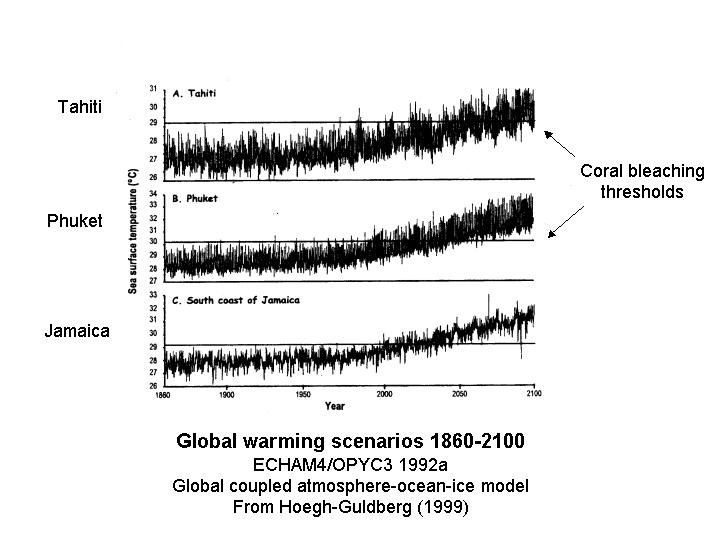
While light is the most important environmental gradient for photosynthetic organisms (including reef corals), temperature is clearly also of great importance to reef coral symbioses, for (at least) two reasons. First, latitudinal patterns of coral distribution are most clearly correlated with temperature; Secondly, elevated sea surface temperatures (SSTs) are the only environmental variable to have been implicated in all episodes of mass coral bleaching documented to date.
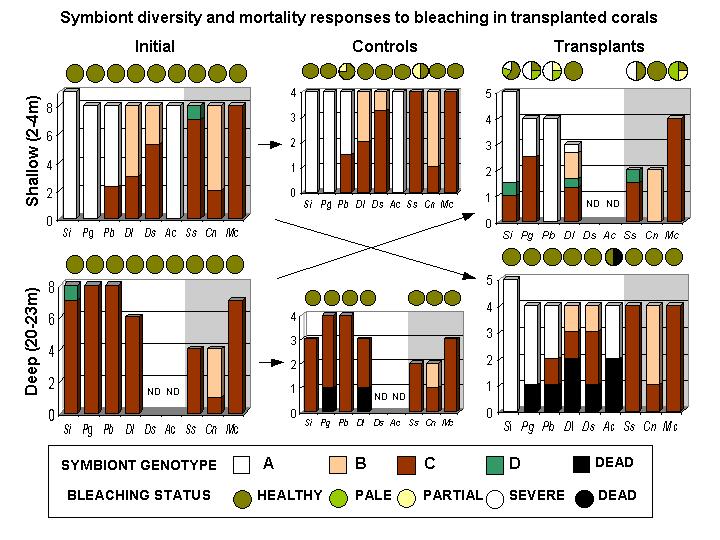
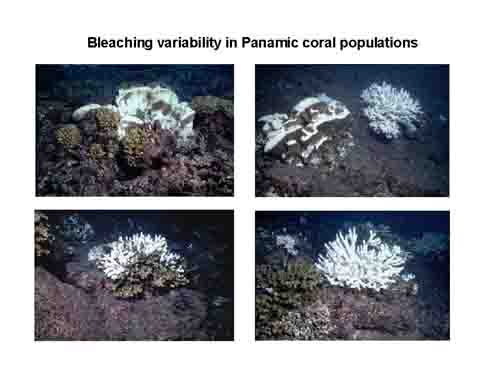
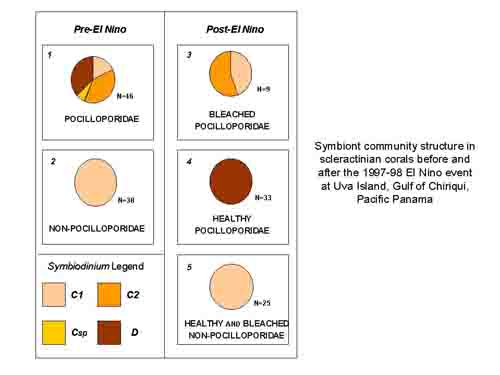
During a period of unusually high sea surface temperatures (SSTs) in the Caribbean in 1995, specific symbiont taxa were preferentially lost from two species of closely related coral hosts, demonstrating how symbiont distributions can be useful in explaining the enigmatic variability characteristic of coral bleaching. It is also becoming clear that during the 1997-98 ENSO event, a particular group of symbionts (Symbiodinium clade D) was unusually resistant to the bleaching. See details here. Current investigations of the role of symbiont diversity focus on the ability of reef corals to host different types of algae under different temperature conditions; and on the ability of reef corals to "switch" or "shuffle" different symbiont types in response to changing environmental conditions, in particular global warming.
Controversy exists over the so-called "Adaptive Bleaching Hypothesis" (ABH), first proposed by theorists in 1993. This states that coral bleaching may be a mechanism that allows corals to change their symbionts more quickly in response to environmental change. There is some evidence that this occurs, but the real question seems to be the timescales over which this occurs, and whether this can allow them to mitigate the effects of climate change in the near future.