

"Anthropogenic" Disturbances
Coral mining
Underwater mining activities have caused severe impacts to some reefs in southeast Asia (Phillipines, Indonesia) and the Indian Ocean (Tanzania, Maldives, Sri Lanka). In most cases limestone blocks are used for building purposes, but occasionally blast remains may be used for landfill.
Sedimentation
|
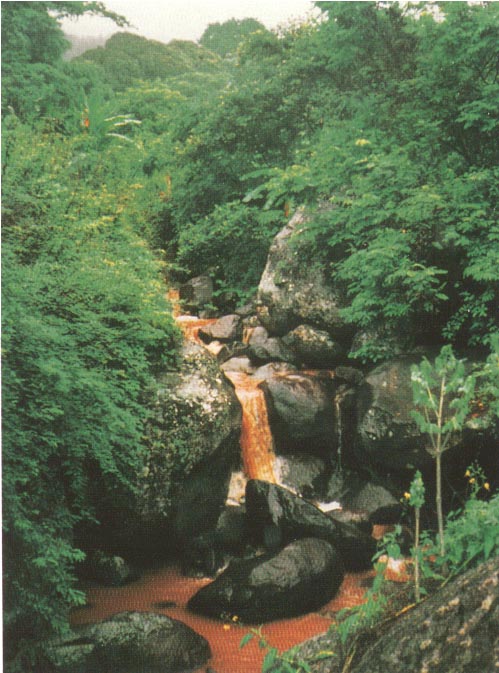
Sedimentation is regarded as one of the foremost threats to coral reefs and may arise as a result of dredging activities, logging and erosional runoff, drilling mud, shrimp farming etc. Sedimentation rates exceeding 50mg/cm2/day are not uncommon in some severely affected reef ecosystems (up to 50 times that experienced by reefs unaffected by human activities). |
 |
|
|
Some cases of sedimentation stress have proved disastrous for coral reef communities. However effects are variable: dredging in Bermuda in the 1960s caused widespread coral mortality, while dredging near Miami Beach in the 1970s caused only sublethal effects (increased mucus production, etc.). |
A good example of an almost complete lack of effect occurred when a Greek freighter carrying 2200 tons of kaolin (clay) ran aground on French Frigate Shoals, northwestern Hawaii.
A variety of factors, including current velocities, bottom topography and the nature of the sediment itself probably interact to determine the severity of disturbance in each case.


