

"Anthropogenic" Disturbances
Eutrophication
Increases in the levels of inorganic nitrate and phosphate are the principal threat to coral reef communities near expanding human populations in coastal areas. World population now exceeds 6 billion, and is expected to have more than doubled by 2050. The greatest increases in population are projected in tropical developing countries, many of which are located in southeast Asia, where the richest marine biodiversity currently exists.
Currently, the best studied areas of the effects of nutrient enrichment on coral reefs are in the Florida Keys and northern Queensland. In both cases large scale agrobusiness is implicated as a downstream source of runoff contributing to the community-level changes observed.
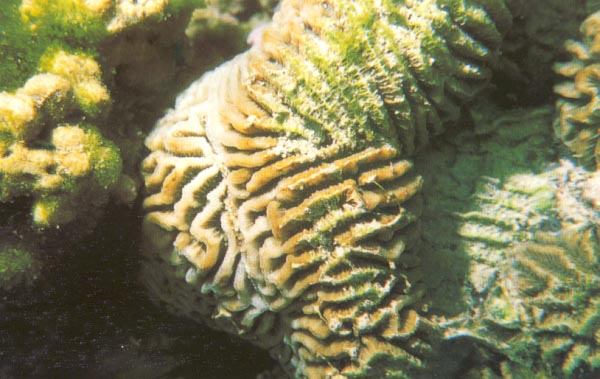
The results of eutrophication are difficult to predict due to the community-level response of affected ecosystems. Kaneohe Bay off the island of Oahu, Hawaii, is an example of one area in which three sewage outfalls discharged over the period 1963-77 with a peak flow rate of 19,000 cubic meters per day. As a result of increases in both soluble nutrients and increased particulate load (phytoplankton and zooplankton), considerable changes in community structure ensued. By 1974 reefs became dominated by the green alga Dictyosphaeria cavernosa, and by 1977 particulate feeders (zoanthids, sponges, barnacles) were the principal invertebrate taxa. Reduction of sewage outfall ameoliorated the effects, but not before groundwater discharges (golf courses, fertilizers etc.) had also increased, leading to soluble nutrient concentrations that were still higher than normal.
Experimental studies have manipulated nutrient concentrations on reefs to observe the effects. Initial work at One Tree Island in the 1970s demonstrated a 25% increase in primary production and a 50-60% decrease in calcification. This work is continued in Australia by the ENCORE project (Elevated Nutrients on COral REefs).
Atmospheric alterations
|
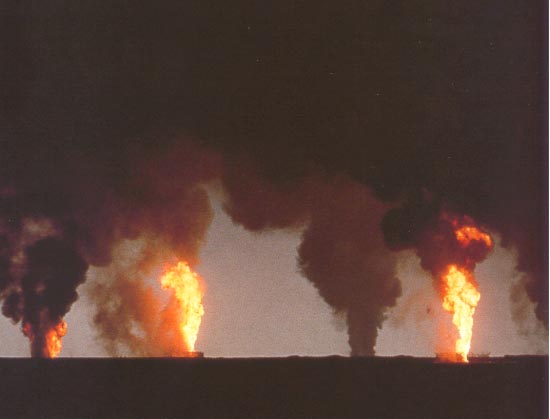
Human activities have been implicated in changes in atmospheric carbon dioxide, methane, CFCs and ozone depletion, all of which have been hypothesized as having eventual effects on coral reefs |
 |
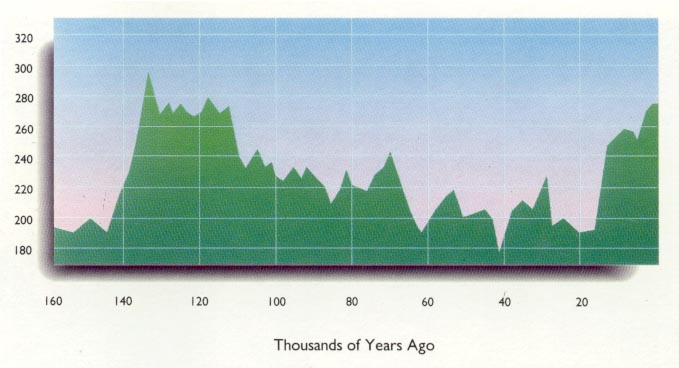
Atmospheric carbon dioxide concentrations can be reconstructed in a variety of ways, including the analysis of trapped gases in Antarctic ice cores.

