New Considerations Since The Release of ATP III: The New Clinical Trials
Since the publication of ATP III in 2001, several major clinical trials of statin therapy have been published that looked at clinical end points. These trials addressed issues that may result in future reassessment of the ATP III treatment recommendations for selected patients.
Heart Protection Study (HPS)
A clinical trial from the United Kingdom that included 20,536 adults, aged 40 – 80 years, who were at high risk (coronary disease, other occlusive arterial disease, and diabetes) for a CVD event. Patients were randomly assigned to simvastatin 40 mg daily or placebo. Primary outcomes that they measured were total mortality for all causes, fatal or non fatal vascular events, the incidence of cancer, and other morbidities. Serum lipids at baseline were performed using non-fasting samples; most other clinical trials use fasting lipid values to assess baseline and LDL was measure directly rather than by the Friedwald equation. Low-density lipoprotein cholesterol is usually calculated using the Friedwald formula: LDL-C (mmol/L) = TC - (HDL-C + TG/2.2). This formula cannot be used if the triglyceride level is greater than or equal to 4.5 mmol/L (400 mg/dL). Serum total cholesterol and high-density lipoprotein cholesterol levels can be measured at any time of the day in the non-fasting state. However, triglyceride levels must be obtained after 10 to 12 hours of fasting. Total cholesterol, high-density lipoprotein cholesterol and triglycerides are measured directly. Direct measurement of low-density lipoprotein cholesterol is now available in certain laboratories but is very expensive.
In the simvastatin patients, all-cause mortality was reduced significantly by 13% (P=0.0003) as compared to the placebo group. Major vascular events reduced by 24%; coronary death rate by 18%; nonfatal myocardial infarction plus coronary death by 27%, nonfatal or fatal stroke by 25%, and cardiovascular revascularization by 24%. Similar event reductions occurred in men and women and for participants younger or older than age 70. No significant increases in adverse effects occurred in the simvastatin group including myopathies, hospital; admissions for nonvascular causes, or cancer incidence. Subgroup analysis from the study found that simvastatin therapy produced similar reductions in relative risk regardless of the initial baseline LDL (even if LDL was ≥135, <116, or <100 mg/dL). In terms of people with diabetes, the study included 5,963 diabetics. Diabetics who received simvastatin had a significant reduction of approximately one quarter in first coronary events, strokes, or revascularization. In the 2,912 patients with diabetes but without coronary or occlusive vascular disease, simvastatin reduced risk by one third. Similar reductions in risk where also found in diabetics on simvastatin with no CAD and whose baseline LDL was <116 mg/dL. The study concluded that cholesterol lowering with statin therapy is efficacious in diabetic patients, including those without CHD and those with low LDL levels. It is important to note that because non-fasting lipid panels were used in this study and direct LDL measurement occurred rather than use of the Friedwald equation, the LDL cutpoints to define the subgroups were lower than if the Friedwald equation had been used as is standard in clinical practice and ATP III methods.
Prospective Study of Pravastatin in the Elderly (PROSPER)
This trial looked at the efficacy of pravastatin therapy in older men and women with or at high risk of developing CVD and stroke. 3,000 women and 2,804 men aged 70 – 82 years who had a history CVD risk factors or vascular disease were randomized to placebo or 40 mg / day of pravastatin. The primary outcome that they measured was a composite of coronary death, nonfatal myocardial infarction, and fatal and nonfatal stroke. Baseline cholesterol varied from 150 – 350 mg/dL. Follow up of patients was 3.2 years. The pravastatin group had LDL reduced by 34%; the composite end point was reduced by 15% (p=0.014); and the major coronary events fell by 19% (p=0.020). No reduction in strokes was found between the two groups, but transient ischemic attacks dropped by 25% in the pravastatin group. The study concluded that PROSPER results allow statin therapy to be extended to older persons.
Anithypertensive and Lipid-Lowering Treatment to Prevent Heart Attack Trial-Lipid Lowering Trial (ALLHAT)
ALLHAT was designed to evaluate current modalities of hypertension treatment. A subset of this trial involved a lipid lowering study. This study was designed to evaluate whether pravastatin therapy as compared to usual care reduced all-cause mortality in older people with moderate hyperlipidemia and hypertension and an additional CHD risk factor. The study involved 10, 355 people over age 55 who had LDL levels ranging from 120 to 189 mg/dL and triglycerides lower than 350 mg/dL. The participants were randomized to non-blinded arms of pravastatin or “usual care”. The number of patients who converted from the usual care group to lipid lowering drugs was high. A nonrandom subset of patients was tested and total cholesterol was reduced by 17% with pravastatin versus the “usual care” group (4% reduction) after 4 years. The all-cause mortality was 14.9% in the pravastatin group versus 10.4% for usual care which is not statistically significant. The African-American subgroup did however demonstrate a significant reduction. The study concluded failure to show treatment benefit which may have been a product of the unblended method of the study and the large amount of cross over of patients from the “usual care” group to the pravastatin group.
Anglo-Scandinavian Cardiac Outcomes Trial – Lipid Lowering Arm (ASCOT-LLA)
This trial examined 19,342 hypertensive patients, aged 40 to 79 years, and having at least 3 other cardiovascular risk factors. Subjects were randomized to 2 different antihypertensive regimens. Among these participants, 10, 305 were in addition randomly assigned to atorvastatin 10mg a day or placebo. Selection was made on the basis of non-fasting total cholesterol of ≤251 mg/dL. LDL-C levels averaged 132 mg/dL and were reduced by 29% in the atorvastatin-treated group at the end of the study. The study was planned for a 5 year follow up but was stopped after 3.3 years. At that time, 100 primary events (nonfatal myocardial infarction and fatal CHD) had occurred in the atorvastatin group, compared with 154 primary events in the placebo group (hazard ratio 0.64, P=0.0005). In the atorvastatin group, incidence of fatal and nonfatal stroke was reduced by 27%; total cardiovascular events declined by 21%; and total coronary events by 29%. There was a non-significant trend toward a reduction in total mortality in the atorvastatin group (13%; P=0.16). Because of these positive results with atorvastatin, the study was terminated early. The study demonstrated that LDL lowering with atorvastatin therapy has considerable potential to reduce risk for CVD in primary prevention in patients with multiple CVD risk factors.
Pravastatin or Atorvastatin Evaluation and Infection – Thrombolysis in Myocardial Infarction 22 (PROVE IT)
PROVE IT was designed to assess whether intensive LDL lowering will further reduce major coronary event more than standard LDL lowering with statin therapy in high risk patients. They compared two different statins at different doses: atorvastatin 80mg versus pravastatin 40mg per day. Prior research studies showed that pravastatin 40 mg / day reduces LDL equivalent to atorvastatin 10 mg / day; and that pravastatin 40 mg / day in patients with established CHD will reduce LDL to near 100 mg/dL and reduce risk for major coronary events by approximately 27%. In the PROVE IT study, 4,162 patients who had been in the hospital for an acute coronary syndrome within the last ten days were randomized to one of the two therapies. The primary end point of the trial was a composite of death from any cause, myocardial infarction, documented unstable angina requiring re-hospitalization, revascularization (performed at least 30 days after randomization), and stroke. At the end of 2 years of therapy, the composite cardiovascular end point was reduced by 16% with atorvastatin compared with pravastatin (P=0.005). Non-significant trends were observed on atorvastatin therapy for total mortality (P=0.07) and for death or myocardial infarction (P=0.06). The high dose of atorvastatin was well tolerated with no case of severe myopathy observed in either treatment group. The LDL level attained on pravastatin 40 mg was 95mg/dL, whereas the level attained on atorvastatin 80 mg was 62 mg/dL. The difference in LDL thus was 35% with atorvastatin. The results of PROVE IT suggest that more intensive LDL lowering therapy reduces major cardiovascular events in patients with acute coronary syndrome compared with less intensive therapy over a period of 2 years. It must be noted, however, that 72% of the patients had LDL levels <125 mg/dL, and in this large subgroup, the modest trend toward benefit of atorvastatin over pravastatin was not statistically significant.
In summary, four of the new trials demonstrated that effective LDL reduction substantially reduced the risk of CHD, whereas the ALLHAT trial failed to show significant risk reduction.
Log-Linear Relationship Between LDL and CHD Risk for ATP III Categorical Goals of Therapy in High Risk Patients
Serum total cholesterol levels are continuously correlated with CHD risk over a wide range of cholesterol values. Serum LDL levels correlate with total cholesterol in populations. There should therefore be a relationship between LDL and CHD risk. In epidemiologic studies, this association does exist and is continuous but not linear; the more the LDL concentration increases - the more steep the risk rises. When the relationship between CHD risk and LDL levels is plotted on a log scale the relationship then becomes linear.
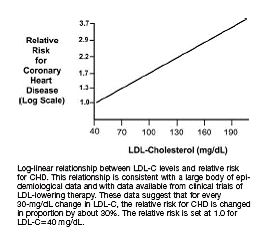
Previously, cholesterol-lowering clinical trials in high-risk patients failed to conclusively confirm the relationship observed in epidemiological studies in the lower ranges of LDL. In 2001, ATP III could not make recommendations on LDL-lowering therapy for persons with lower levels of serum LDL because there was no evidence at the time. The results of HPS (Heart Protection Study) helped to confirm the epidemiology studies with new clinical evidence at lower LDL levels.
“HPS provides strong new evidence to support the log-linear relationship between LDL levels and CHD risk, even at low LDL concentrations. In fact, HPS results suggest that reducing serum LDL from any baseline level further lowers risk in high-risk patients. In HPS, absolute risk reductions for major vascular events were smaller at lower LDL levels because the risk imparted by higher LDL itself was lacking. Nonetheless, the association between LDL levels and CHD risk seemingly remains log-linear at low LDL levels. The recent trials did not identify a threshold LDL level below which no further reduction in risk occurs. (Grundy, S., et al “Implications of Recent Clinical Trials for the National Cholesterol Education Program Adult Treatment Panel III Guidelines” Circulation 2004; 110: 227-239.)
There are many implications of the log-linear relationship between LDL and CHD risk for ATP III’s categorical goals of therapy in high risk patients.
Rational for Recommended Low LDL Goal (<100) in High Risk Patients By ATP III
ATP III set the minimal goal in high risk patients to be <100 mg/dL. This level was as low as the clinical evidence supported in 2001. In addition, standard doses of statins used in secondary prevention trials achieved LDL <100 in a little more than half of high risk patients, with the remaining patients needing increased doses or a second agent added to the regimen.
Rationale for Optional Very Low LDL Goal (70 mg/dL)
In the HPS study, high risk patients – even those with a low baseline LDL <100 mg/dL had significant risk reduction when statins were introduced. HPS suggests that if you take high risk patients with a baseline of 100 mg/dL and reduce their LDL another 30%, you will achieve another 30% reduction in risk reduction. In the PROVE IT study high dose statin therapy reduced risks in 2 years as opposed to those using standard doses. PROVE IT and HPS results infer that the ATP III target for high risk patients of an LDL <100 mg/dL is not a sufficient goal and that more benefit can be achieved by further LDL lowering. In terms of absolute risk, it appears that 70 mg/dL is a preferred goal for very high risk patients.
So Did They Officially Lower The LDL Goal Recommendations?
No. The National Heart, Lung, and Blood Institute, the American Heart Association, and the American College of Cardiology Foundation found that four of these five post-ATP III studies had “implications” on the ATP III guidelines. Generally speaking, all clinical trial results in medicine must be replicated by other large clinical trials and performed in diverse populations before firm recommendation changes can be made. HPS and PROVE IT are not sufficient to make ATP III recommendation changes.
Furthermore, there have been concerns in what is known as the J- curve phenomenon. When a large population group has its blood cholesterol levels plotted on a graph against cardiovascular disease mortality, it usually results in a J-shaped curve. This curve shows that those with higher cholesterol levels are more likely to die from CVD. The curve also shows that those with very low cholesterol levels also have higher CVD mortality. This accounts for the J shape known as the J-curve phenomenon. It is thought that the group with the low cholesterol levels and higher mortality rate are different from the general population in ways that are not fully understood. There have been studies linking low serum cholesterol with cerebral hemorrhage, but a direct causal relationship between low LDL and increase morbidity and mortality has not be found. Reducing LDL to very low levels remains a concern.
Other questions remain in further lowering the LDL goals. In high risk patients with very high LDL baselines (>150 mg/dL), many will not be able to reach such low levels (<70 mg/dL) with any current LDL lowering drug regimen. A further consideration is whether more statin is necessarily safer? Studies have not found a significant increase in incidence of rhabdomyolysis or liver enzyme abnormalities at this time in high dose statins, but long term studies on risks remain to be done.
At this time, these recent clinical trials do not change the ATP III recommendations but offer a “therapeutic option” in selected high risk groups.
Implications for Clinical Management of LDL in High Risk Patients and Moderately High Risk Patients
In high-risk persons, the recommended LDL-C goal is <100 mg/dL. When risk is very high, an LDL-C goal of <70 mg/dL is a therapeutic option on the basis of available clinical trial evidence. This therapeutic option extends also to patients at very high risk who already have a baseline LDL-C <100 mg/dL. Those in the category of very high risk: the presence of established CVD plus (1) multiple major risk factors (especially diabetes), (2) severe and poorly controlled risk factors (especially continued cigarette smoking), (3) multiple risk factors of the metabolic syndrome (especially high triglycerides ≥200 mg/dL plus non-HDL-C ≥130 mg/dL with low HDL-C [<40 mg/dL]), and (4) patients with acute coronary syndromes. When a high-risk patient has high triglycerides or low high-density lipoprotein cholesterol (HDL-C), consideration can be given to combining a fibrate or nicotinic acid with an LDL-lowering drug. For moderately high-risk persons (2+ risk factors and 10-year risk 10% to 20%), the recommended LDL-C goal is <130 mg/dL, but an LDL-C goal <100 mg/dL is a therapeutic option on the basis of recent trial evidence. The latter option extends also to moderately high-risk persons with a baseline LDL-C of 100 to 129 mg/dL. When LDL-lowering drug therapy is employed in high-risk or moderately high-risk persons, it is advised that intensity of therapy be sufficient to achieve at least a 30% to 40% reduction in LDL-C levels. Moreover, any person at high risk or moderately high risk who has lifestyle-related risk factors (eg, obesity, physical inactivity, elevated triglycerides, low HDL-C, or metabolic syndrome) is a candidate for TLC to modify these risk factors regardless of LDL-C level. The optional goal of <70 mg/dL does not apply to individuals who are not high risk. (Circulation. 2004;110:227-239.)
Article:
Grundy, S., et al. Implications of Recent Clinical Trials for the National Cholesterol Education Program Adult Treatment Panel III Guidelines. Circulation July 13, 2004. Issue 110. Pages 227-239
http://www.nhlbi.nih.gov/guidelines/cholesterol/atp3upd04.pdf